


QSMET Truck-LAB: the mobile weather station that changes the game
A look back. In 1998, Ange Pasquali, then team manager at Toyota Motorsport, revolutionised the approach to weather forecasting in motorsport.
“We arrived at Le Mans with infinite respect and military-style organisation,” he recalls. “I had convinced Météo-France to come with us. Their support was invaluable. I had seen at Roland-Garros how they anticipated rain by covering the courts. That year, it rained during the night, exactly as forecast. The drivers went straight back out on the correct tyres.”
That first collaboration convinced Météo-France to create a service dedicated to motorsport. The organisation would gradually expand its involvement, eventually becoming the weather service provider for the FIA WEC, Formula 1 and numerous manufacturers across all disciplines. A more than twenty-year adventure that came to an end in 2022.
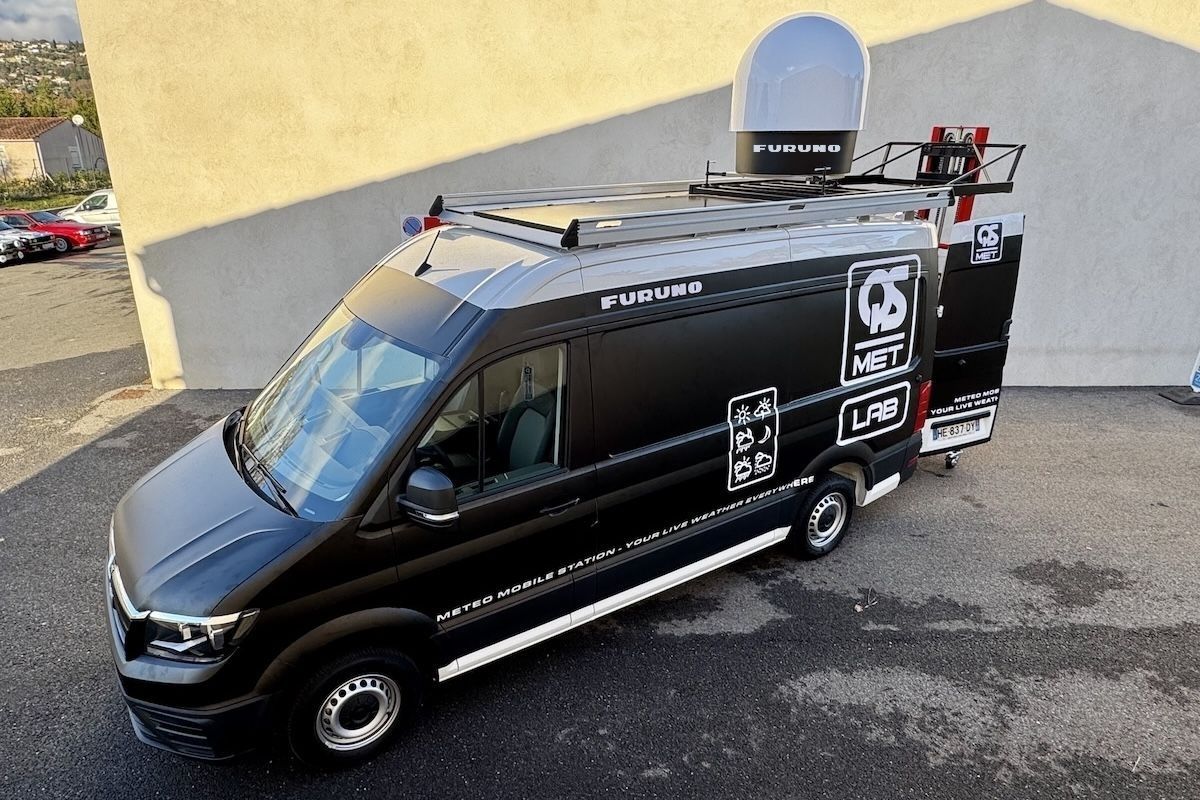
For Quadra Sports’ QSMET division, stopping was never an option. After taking over the torch, particularly in the WEC, the teams designed a new tool intended to broaden the range of services offered and open the door to other major events: the QSMET Mobile Weather Truck-LAB.
Founded in 2005, Quadra Sports and its QSMET division have established themselves as a benchmark in operational meteorology for elite sport. Today, the QSMET staff draw on top-level experience across other international competitions, including disciplines such as sailing, cycling and major tennis tournaments.
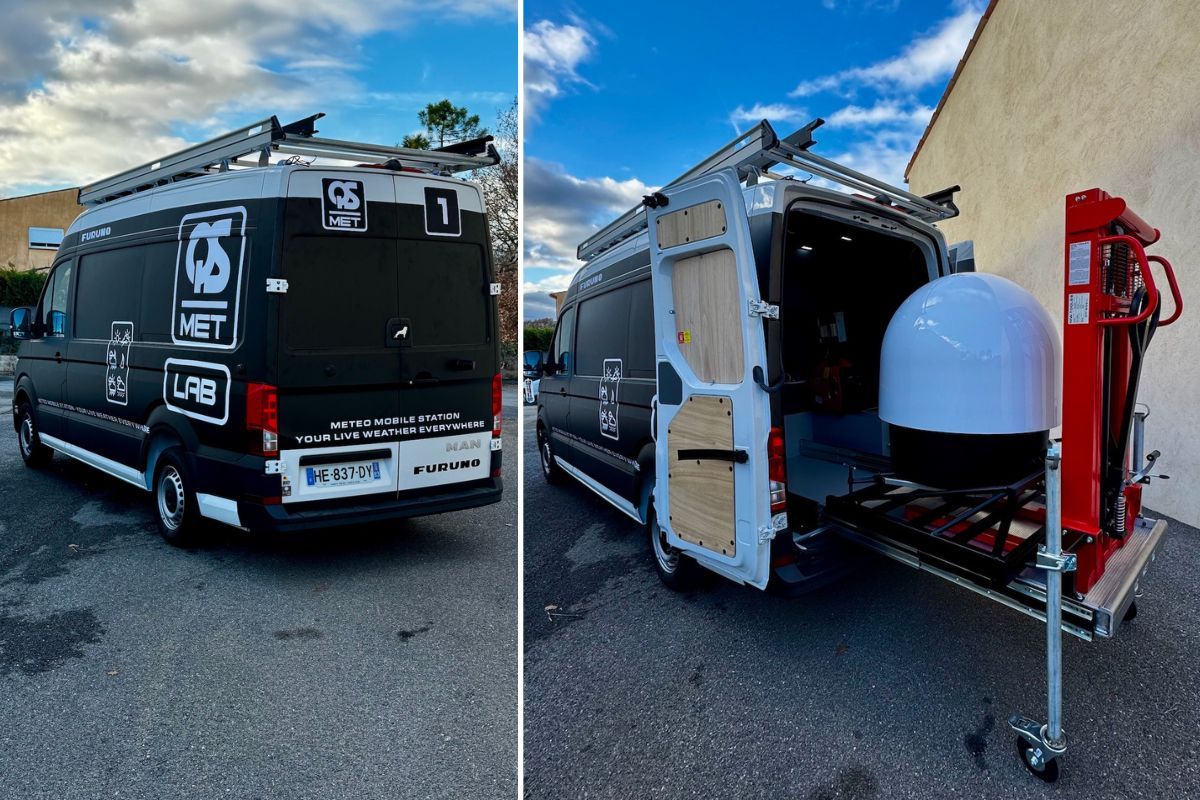
What is the QSMET Mobile Weather Truck-LAB?
It is a state-of-the-art mobile meteorological unit, capable of delivering real-time, high-precision weather observations and forecasts for motorsport and major outdoor events, across Europe and potentially worldwide.
The project is built on QSMET’s proven operational model, the result of several decades of experience, combining cutting-edge technology with a deep understanding of the constraints of live events, where weather directly affects safety, performance, logistics and commercial stakes. One of the most striking recent examples remains the FIA WEC and the 24 Hours of Le Mans.
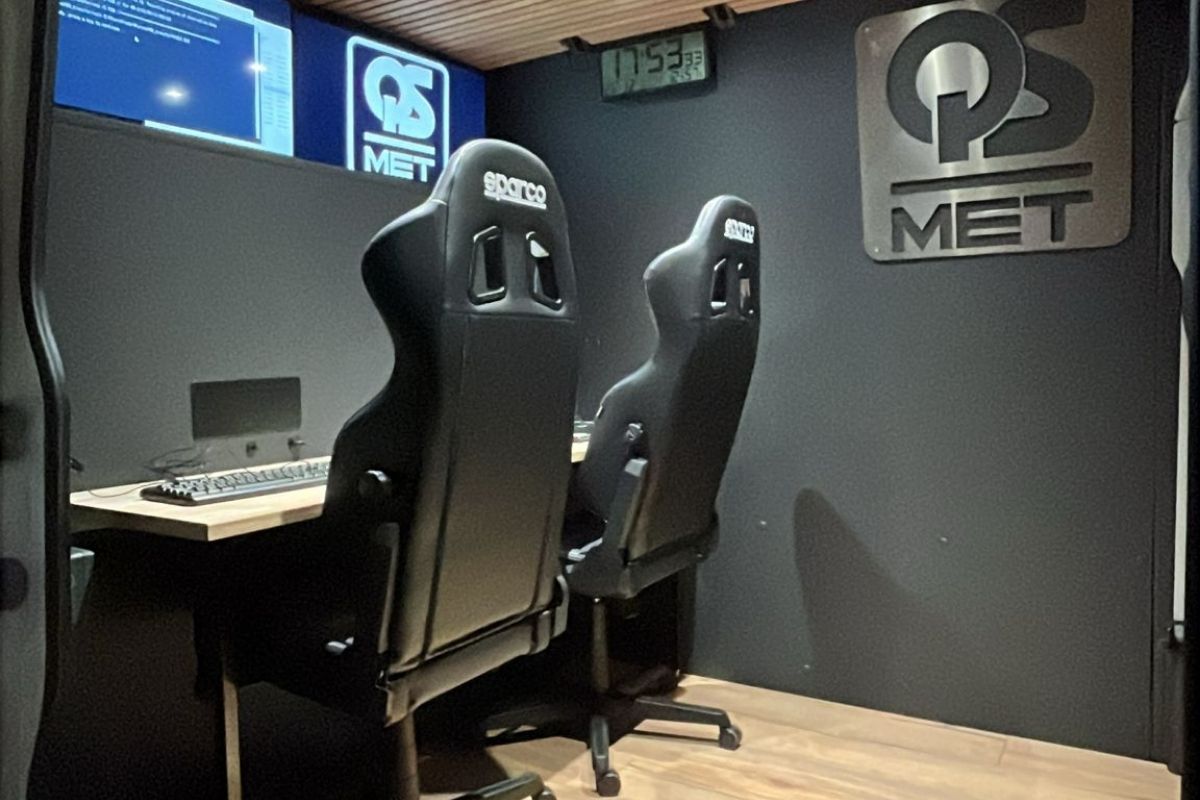
Designed as a fully autonomous meteorological laboratory, the truck is independent in both hardware and power supply, rapidly deployable, and equipped with solar panels as well as an integrated high-speed Internet connection.
Built on a MAN L3 H3 platform in the Racing Solutions workshops in Montauroux (Var, France) and designed by Frédéric Cappuccio, it brings together in a single mobile unit a radar, data acquisition and forecasting systems, a communications infrastructure and expert analysis.
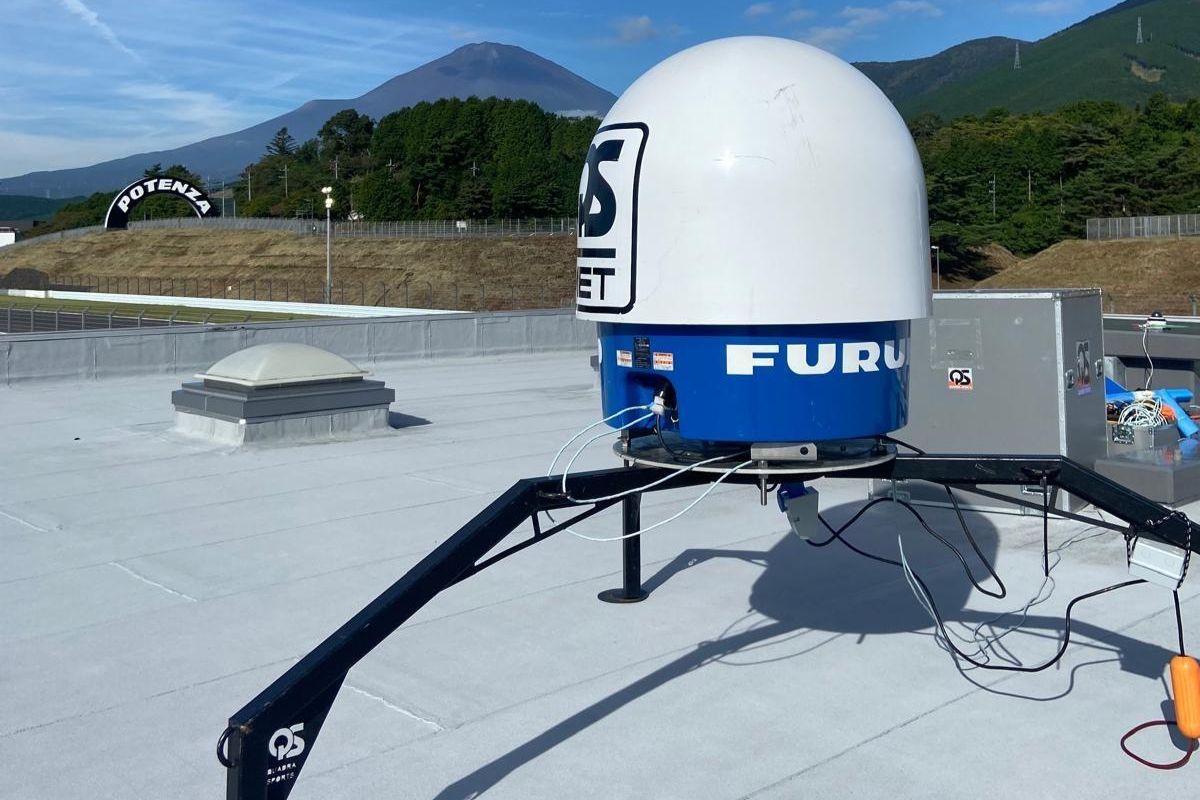
The radar is supplied by Furuno Electric, a Japanese specialist in marine navigation electronics, renowned for its radar systems, sounders and navigation instruments.
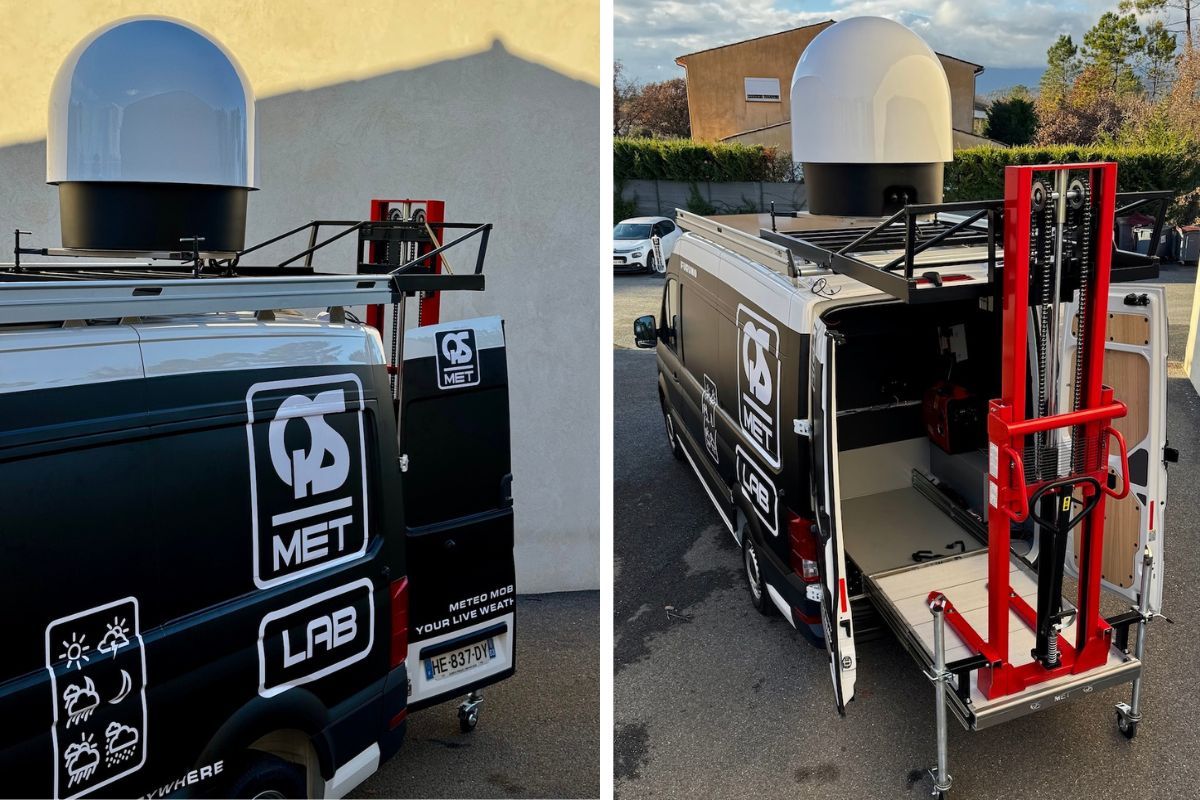
This configuration allows QSMET to deliver an identical level of service on permanent circuits, temporary venues or isolated locations. The truck can be installed inside or outside a site depending on available space, topography and geographical constraints. Its rapid deployment and dismantling make it perfectly suited to intensive event calendars and international tours.
Portability, versatility and rapid deployment
Portability is one of the Mobile Weather Truck-LAB’s key strengths. All systems are designed to be transported, installed quickly and operate reliably in a wide range of environments, including sites with complex topography.
Thanks to detailed pre-event studies, QSMET identifies the optimal radar location to maximise coverage and limit blind spots. At Spa-Francorchamps, for example, the system is installed at a validated site several kilometres from the circuit, selected after years of operational testing in the WEC and Formula 1.
These characteristics make the Truck-LAB particularly valuable for events without existing meteorological infrastructure, or when permanent installations are not suitable.
Technology pushed to the limit
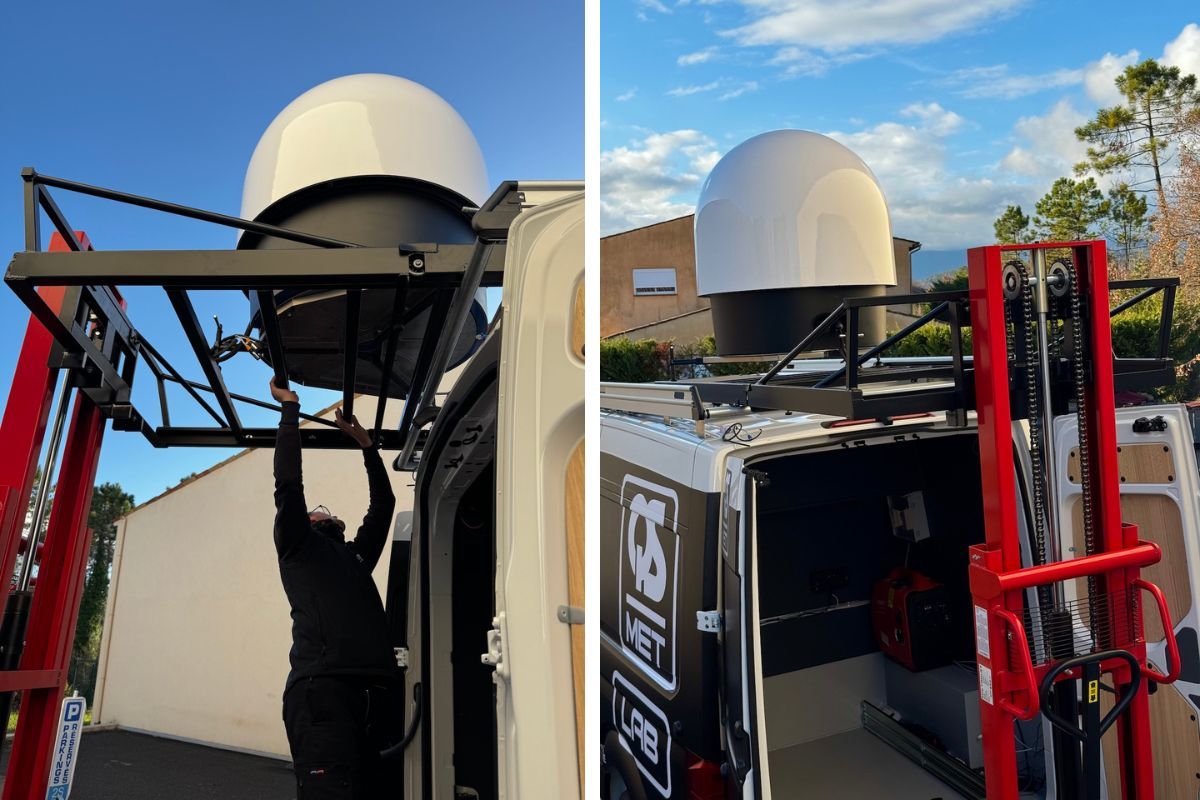
At the heart of the system is the Furuno WR-110 mobile weather radar, identical to the one currently used in the FIA WEC and at the 24 Hours of Le Mans. This high-resolution radar is specifically designed for fine precipitation detection and very short-term forecasting.
It is complemented by a network of automatic weather stations distributed around the site. On a circuit, one station is typically installed in the pit lane or central operational area, including a track surface temperature sensor, while other stations are positioned at strategic points to capture the full range of local weather variations. All data are transmitted in real time to forecasters and integrated into QSMET’s visualisation and forecasting tools.
The truck also houses secure servers, data processing systems and communication equipment ensuring a continuous and redundant flow of information. Data are distributed via a secure web portal, accessible to organisers, race control, teams, broadcasters and safety officials.
On-site operations and forecast delivery
During events, the QSMET forecaster is either directly embedded within race control or the operational centre, or based inside the truck. This proximity enables constant dialogue with decision-makers and immediate contextualisation of forecasts.
Forecasting begins several days before the event, with medium-range trends published early in the week to support planning and logistics. As the event approaches, updates become increasingly frequent, including live forecasts throughout all official sessions.
Radar imagery is continuously analysed by experts who provide precise information on timing, intensity and confidence levels of weather impacts. Dedicated briefings are issued whenever conditions may affect safety, the schedule, logistics or post-event operations.
Human expertise at the heart of QSMET
Technology alone is not enough. QSMET’s true strength lies in its people. Each deployment of the Mobile Weather Truck-LAB includes a highly experienced forecaster and an IT and systems specialist, ensuring both scientific accuracy and technical reliability under demanding conditions.
-
MANAGER : ANGE PASQUALI
QSMET is led by Ange Pasquali, Managing Director of Quadra Sports and a recognised figure in international motorsport. His career spans several decades, notably in endurance racing and Formula 1, with key roles at Toyota (GT-One at Le Mans, Toyota F1).
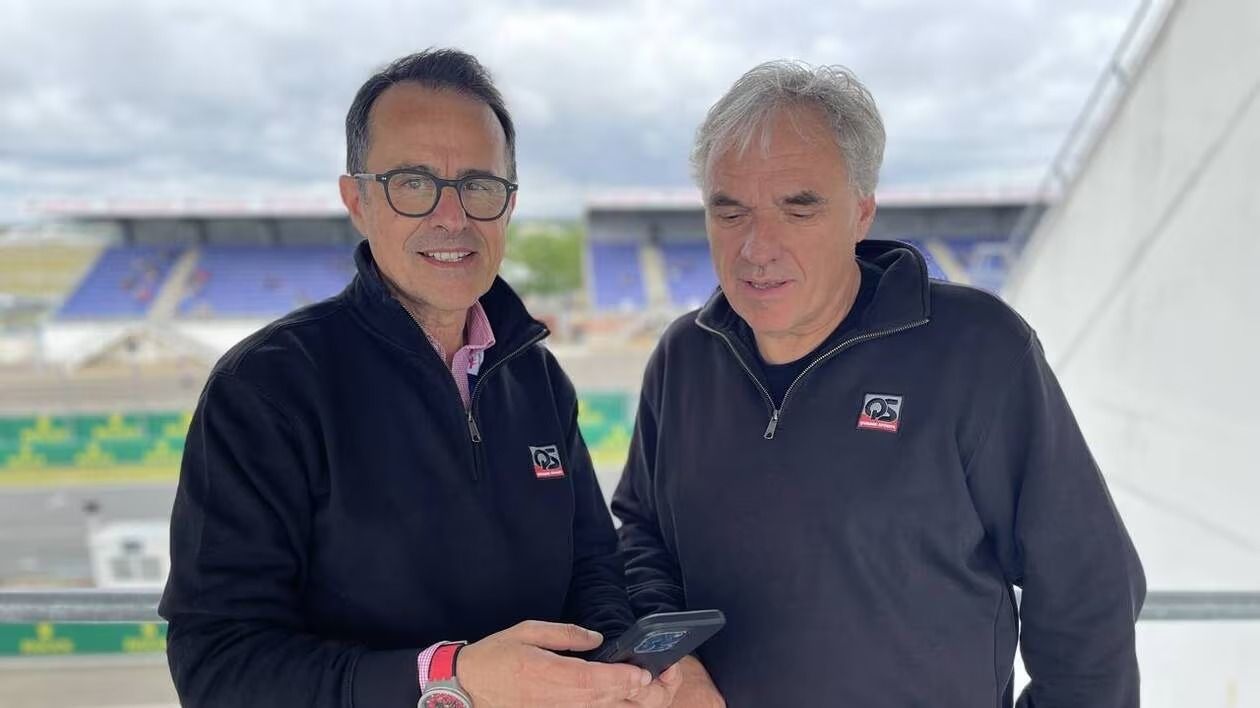
As early as 1997, he identified weather as a decisive factor in performance and safety in endurance racing. His collaboration with Météo-France led to the creation of the first bespoke weather services for motorsport, including the pioneering use of mobile radars at circuits.
He subsequently played a central role in the introduction of professional meteorological services in Formula 1, both operationally and contractually. In recognition of his contribution, he was awarded Météo-France’s “La Verrier” medal. Today, his leadership ensures the alliance between scientific rigour and operational pragmatism.
-
SENIOR EXPERTISE: GUY BOTTLAENDER
Among QSMET’s technical pillars is Guy Bottlaender, one of Europe’s most respected sports meteorologists and a cornerstone of the project. A former senior forecaster at Météo-France, he long coordinated Formula 1’s weather services and has contributed to an exceptional number of major events.
His experience spans Formula 1, the FIA WEC, WRC, the Olympic Games, major sailing competitions, the Tour de France and international tennis tournaments. In rallying, his forecasts have directly contributed to several world championship titles.
At QSMET, Guy Bottlaender is responsible for on-site forecasting and technical supervision, ensuring continuity, methodological rigour and the transmission of expertise.
QSMET: continuous innovation
The Mobile Weather Truck-LAB integrates proprietary forecasting operations and distribution software, developed in-house by Maxisoft, optimised for the rapid assimilation of radar, satellite and surface data.
The company also invests in advanced tools such as 3D radar scanning, enhanced lightning detection and enriched visualisation solutions. Artificial intelligence and machine-learning technologies are under consideration to further improve future performance, while keeping human expertise at the core of analysis and decision-making.
Innovation is driven by field feedback, ensuring developments are directly aligned with real operational needs.

Comments
Log in to comment the article